| Government Affairs |

Half Moon Bay Repeals Rent Stabilization and Registry
On March 17, 2026, the Half Moon Bay City Council made a rare and significant decision voting 3–2 to repeal both the rent stabilization and rental registry programs.
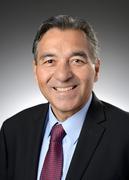
"Programs that were already in place were repealed," emphasized SAMCAR Government Affairs Director Fernando Peña. "That does not happen often."
This outcome reflects months of focused advocacy led by SAMCAR on behalf of homeowners, Realtors, property managers, and housing providers in Half Moon Bay and the surrounding unincorporated communities.
For the past two years, these programs have created real and measurable challenges. Today, there is a renewed sense of relief across the local housing community.
Every Realtor, homeowner, property manager, and small housing provider in Half Moon Bay, and in the surrounding areas, benefits from this decision.
At the center of the issue were unintended consequences including expenditure of $257,000 in taxpayer spending — $150,000 originally diverted from the Housing Affordability Fund — fines and penalties directed at small property owners, ongoing consultant and software costs of approximately $25,000 annually, significant staff time redirected from other city priorities, and a system slow to recover its own costs.
These programs placed a disproportionate burden on small housing providers; the very individuals who make up the backbone of the local rental housing market.
SAMCAR's advocacy effort was rooted in facts, data, and real-world experience. We worked to ensure that policymakers fully understood the economic realities facing housing providers like carrying costs for small property owners with 1–4 units, documentation of rising expenses — mortgages, property taxes, insurance, maintenance, and utilities, to name a few.
The council and staff were provided with documents identifying more than 20 nonprofit organizations already providing tenant support across San Mateo County, and existing private-sector data platforms that can provide rental market insights without the need for a costly registry.
At the heart of the issue was a simple economic truth: the rent cap did not match the cost of operating housing.
With allowable increases ranging from approximately 1.2% to 3%, while inflation and operating costs rose significantly higher, many property owners were left absorbing the gap. The City bypassed state law AB 1482 and the consequences were devastating to local property owners.
The impact of these policies was not theoretical and was already being felt, including property owners operating on razor-thin margins or at a loss, deferred maintenance on rental properties, housing providers choosing to sell rather than continuing to operate under unsustainable conditions, and potential buyers stepping away due to restrictive cap structures.
That is not how housing supply is preserved. That is how it is reduced.
The rental registry program raised several critical concerns like adding layers of bureaucracy, increased administrative costs for both the city and housing providers, potential cybersecurity risks, and duplication of data already available through existing market-based tools.
Importantly, SAMCAR did not simply oppose these programs. We offered constructive alternatives. We encouraged the City to focus on targeted, meaningful support for those in need, like an emergency rental assistance program for vulnerable households, increased public awareness of existing resources (nonprofit housing and legal assistance programs, Section 8 housing vouchers, and statewide tenant protections under AB 1482 and SB 567).
The City Council has now directed staff to explore these solutions.
This marks a meaningful shift from broad, punitive regulation to focused, effective support.
This outcome reinforces an important truth: Realtors are essential voices in housing policy.
Through thoughtful advocacy, data-driven analysis, and collaboration, SAMCAR helped shape a result that supports housing stability, preserves supply, and protects the long-term viability of the local housing market.
We remain committed to working with local leaders to advance policies that are balanced, effective, and grounded in real-world outcomes—for our members and for the communities we serve.
Share on Social Media
Facebook | Instagram | Linkedin
Press
Rent control repeal in works: Half Moon Bay also votes to remove the city's rental registry program (San Mateo Daily Journal 3/24/26)
Half Moon Bay advances repeal of rent control (Coastside News 3/18/26)
REALTOR® Party Success Stories: San Mateo REALTORS® Help Half Moon Bay Reverse a Failed Rent Control Experiment (Realtor Party News 5/26/26)
Aerial photo of Half Moon Bay coast by Griffin Wooldridge free to use from Pexels.com